



Abstract
The 2026 comprehensive iteration of the iThenticate 2.0 algorithm has upgraded from traditional text matching to a dual-engine model of semantic comparison and AI detection, rendering traditional plagiarism reduction and self-inspection methods largely ineffective. A large number of SCI manuscripts encounter problems such as excessive similarity, AI misjudgment, and academic early warnings due to inadequate self-inspection. Based on 15 years of empirical data from SCI submission coaching, this paper constructs a complete pre-submission self-inspection system aligned with the core rules of the new algorithm, sorts out four dimensions of format, similarity, AI compliance and academic integrity, summarizes common self-inspection misunderstandings and optimization solutions, and helps researchers avoid submission risks and improve the initial review pass rate.
Key words
iThenticate 2.0; SCI paper submission; plagiarism check self-inspection checklist; academic integrity; AI writing detection
iThenticate check:
https://www.58sci.com/ithenticate/index.html
1. Introduction
As the official plagiarism detection system designated by global SCI and EI journals, algorithm updates of iThenticate directly determine the initial review results of paper submissions. In May 2026, iThenticate officially completed a new round of algorithm upgrades, completely abandoning the previous single continuous text matching model, and adding four major functions: semantic vector recognition, AI paraphrased content tracing, accurate self-plagiarism marking, and intelligent cheating behavior screening. After the algorithm upgrade, industry data shows that more than 30% of manuscripts processed with traditional plagiarism reduction methods fail to meet the similarity standard, and nearly 42% of manuscripts are returned for revision due to self-content reuse and implicit AI-generated content. Researchers’ past self-inspection experience can no longer adapt to the new rules.
Under the new algorithm system, the judgment of paper plagiarism no longer only depends on text overlap rate, but focuses more on semantic logic, writing style and original details. Many authors lack a systematic self-inspection process and revise manuscripts based on subjective experience, which eventually leads to problems such as excessive similarity rate, abnormal AI score and academic integrity early warnings, delaying the submission cycle. On this basis, combined with empirical data from hundreds of SCI manuscripts, this paper constructs a standardized self-inspection system adapted to the 2026 new algorithm, providing researchers with an easy-to-understand and directly implementable pre-submission self-inspection solution.
2. Core Changes of the 2026 New iThenticate Algorithm
Compared with the old version, the core changes of iThenticate 2.0 in 2026 can be summarized as "shifting from text-focused to logic-focused, from matching-focused to originality-focused". The old algorithm only compared text word overlap, and authors could quickly reduce similarity by synonym replacement and word order adjustment. However, the new algorithm relies on deep learning models, which can accurately identify sentence semantics, argumentation logic and writing habits, greatly improving the accuracy of plagiarism detection and AI detection.
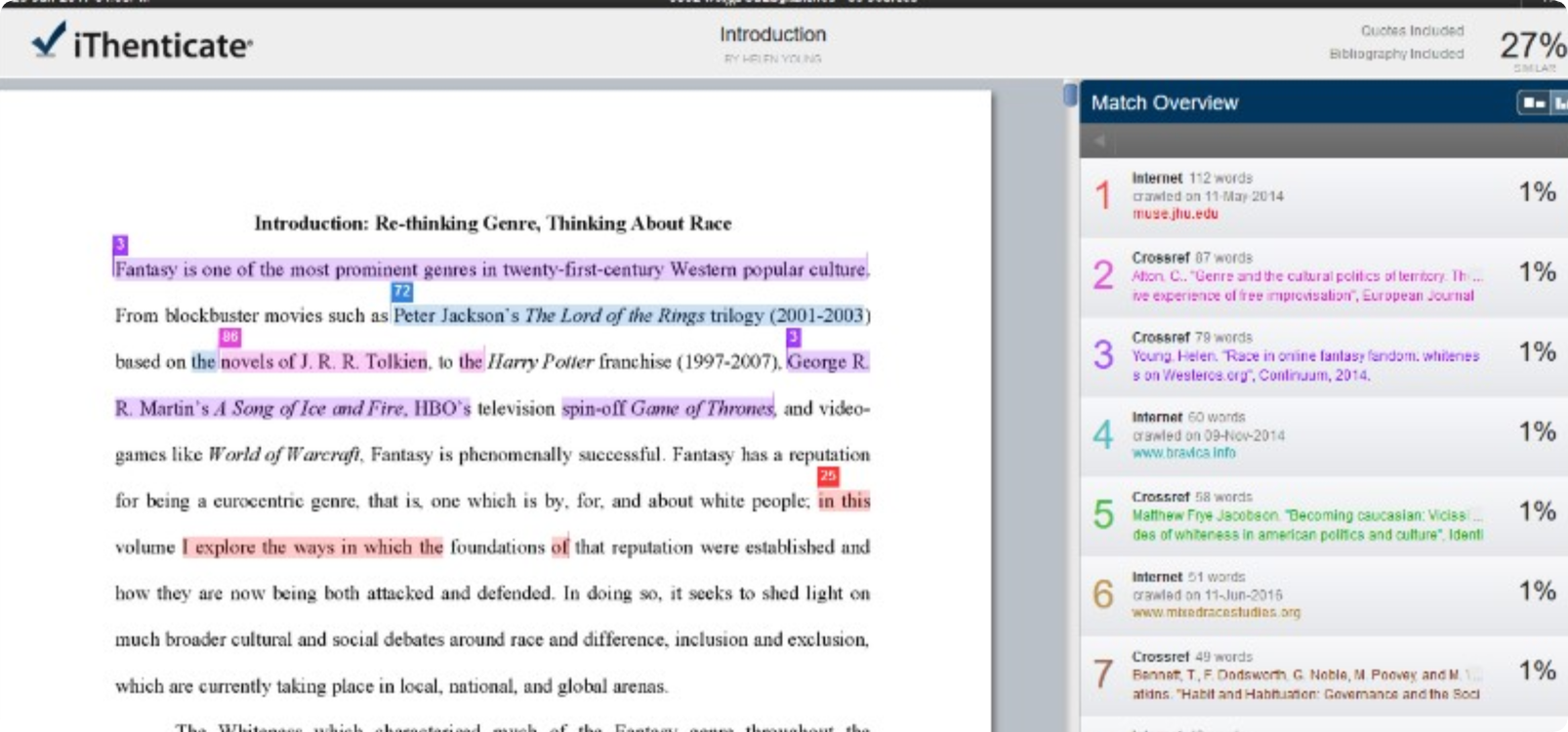
Empirical data shows that for manuscripts revised by traditional synonym replacement and word order adjustment, the average similarity rate could be reduced to about 12% in 2025, while the same revision method can only reduce it to 19% in 2026, and nearly 30% of manuscripts fail to meet the journal qualification standard. Meanwhile, the new system adds an independent Flags warning panel, which can automatically identify cheating behaviors such as zero-width spaces, hidden fonts, and special character substitution. Once abnormalities are detected, it will directly push integrity warnings to journal editors, with more serious consequences than simply excessive similarity rate.
In addition, the new algorithm strengthens the recognition ability of self-plagiarism. It will separately mark the reused content of the author's published achievements, instead of being included in the total similarity rate as a whole, which is convenient for editors to accurately judge improper reuse behavior. The simultaneously upgraded AI detection module can identify content from the latest large models such as GPT-5 and Gemini 2.5 Pro, and at the same time accurately screen texts processed by AI paraphrasing tools such as Quillbot, completely eliminating the speculative behavior of "AI plagiarism laundering".
3. Complete Pre-Submission Self-Inspection System for iThenticate in 2026
Combined with the new algorithm rules and journal acceptance standards, this paper divides submission self-inspection into four core dimensions: basic format, originality & similarity, AI compliance, and academic integrity, covering all plagiarism risk points and adapting to the SCI submission needs of undergraduates, postgraduates, doctoral students and researchers.
Basic format self-inspection is the key to avoiding invalid similarity, and also the most easily overlooked link. First of all, references must strictly match the format of the target journal. Standardized references can be automatically identified and excluded by the system, reducing the invalid similarity rate by 3%-8%. Secondly, any cheating format operations are prohibited in the full text. The new algorithm can 100% identify hidden text, special character substitution and other behaviors, directly triggering academic early warnings. At the same time, professional terminology, instrument models, gene and protein names must use industry-standard naming, and cannot be tampered with arbitrarily for plagiarism reduction. Proper nouns must be marked with full name and standard abbreviation when they first appear, and abbreviations shall be used uniformly in the following text to reduce the proportion of invalid repetition.
Originality & similarity self-inspection is the core link of submission, adapting to the new semantic plagiarism detection rules. Authors must eliminate superficial revisions such as simple word replacement and word order adjustment. All cited content must reconstruct logic and replace sentence patterns, and supplement exclusive experimental details combined with their own research scenarios, so as to reduce the similarity rate by adding personalized content. Empirical evidence shows that adding exclusive information such as reaction time, reagent concentration and instrument parameters in the experimental method can reduce the paragraph similarity rate by more than 10% on average. At the same time, similarity data must be strictly controlled. It is recommended that the total similarity rate of ordinary journals be controlled within 15%, and that of top journals be less than 10%. The repetition proportion of a single literature shall not exceed 3%, so as to avoid concentrated large-scale copying. For the reuse of self-achievement content, it must be rewritten and cited in a standardized manner to eliminate implicit self-plagiarism.
AI compliance self-inspection is a new core audit focus in 2026. At present, most journals do not prohibit AI-assisted writing, but strictly prohibit concealing AI usage. In the self-inspection process, it is necessary to clearly distinguish between AI-assisted and AI-original content. Light auxiliary content such as outline sorting and grammar polishing can be used normally, while core argumentation, experimental analysis and research conclusions must be manually original. At the same time, it is forbidden to use AI paraphrasing tools to reprocess AI-generated content. The new algorithm can accurately identify such plagiarism laundering behaviors. It is recommended that the proportion of AI-generated content in the manuscript be controlled within 15%. Paragraphs exceeding the standard need to be manually rewritten and optimized, supplemented by personal thinking and research details.
Academic integrity self-inspection is the bottom-line requirement for manuscript acceptance. Before submission, check one by one to eliminate problems such as duplicate submission, data fraud, chart reuse, missing citation and random citation. All cited literature views and experimental data must be marked with complete sources. Group cooperation and co-authored content must be confirmed by all authors, and illegal behaviors such as ghostwriting and unauthorized revision are prohibited. Charts must be guaranteed to be original, and splicing, tampering with online or published pictures is strictly prohibited to avoid the risk of image plagiarism detection.
4. Common Self-Inspection Misunderstandings and Optimization Strategies Under the New Algorithm
Combined with a large number of submission cases, after the implementation of the new algorithm, three self-inspection misunderstandings are the most common. First, it is mistakenly believed that synonym replacement can effectively reduce similarity. In fact, the new semantic plagiarism detection is not limited to text matching. Only replacing words cannot change the core semantics of sentences, and the plagiarism reduction effect is negligible. Second, excessive pursuit of zero similarity rate, deliberate tampering with professional terms and deletion of standard citations, leading to a significant decline in the professionalism of the paper, which is not worth the loss. Third, ignoring the hidden risks of AI, relying on AI paraphrasing tools to optimize manuscripts, which are finally accurately identified by the system and trigger integrity verification.
In view of the above misunderstandings, the optimal optimization strategy is to adhere to the core principle of "logical rewriting + detail filling". When rewriting cited content, completely break away from the original sentence pattern and logical framework, and reorganize language combined with your own research conclusions; in general experimental methods and basic theory parts, fill in a large number of exclusive research details to create personalized content; use AI tools reasonably and compliantly, only for auxiliary optimization, with core content written manually throughout the process, and actively disclose the scope of AI use as required by the journal.
5. Conclusion
The comprehensive upgrade of the iThenticate algorithm in 2026 has completely ended the era of speculative plagiarism reduction for SCI papers, and returned academic plagiarism detection to the essence of originality and professionalism. For researchers, adapting to the new algorithm and establishing a standardized self-inspection system is the core key to avoiding submission risks and improving the initial review pass rate. Under the new rules, there is no need to worry too much about normal terminology and reference repetition. As long as the four core tasks of format standardization, logical rewriting, AI compliance and integrity self-inspection are done well, and manual originality and standardized citation are adhered to, the journal plagiarism detection requirements can be easily met. This standardized self-inspection checklist can effectively avoid more than 90% of plagiarism and academic risks, and provide a solid guarantee for the smooth submission of SCI papers.